Chinese Paper Cutting: A Living Practice, Not One Fixed Style
Chinese paper cutting, or 剪纸 (jiǎnzhǐ), shapes paper with scissors, knives, and related cutting methods. It is not one fixed red silhouette, one folding method, or one list of universal symbols.
Core cultural guideUpdated August 25, 2026No template download on this page
Chinese paper cutting, or 剪纸 (jiǎnzhǐ), shapes paper with scissors, knives, and related cutting methods. A finished paper-cut may decorate a window, carry a wish within a larger composition, guide embroidery, mark an occasion, or express a maker's own subject. It is not one fixed red silhouette, one folding method, or one list of universal symbols.
That range matters. UNESCO describes Chinese paper-cut as a practice found across China and among different ethnic groups, with motifs, purposes, and methods shaped by communities and makers. The useful first question is therefore not “What does every Chinese paper cut mean?” but “What object am I looking at, who made it, and for what setting?”
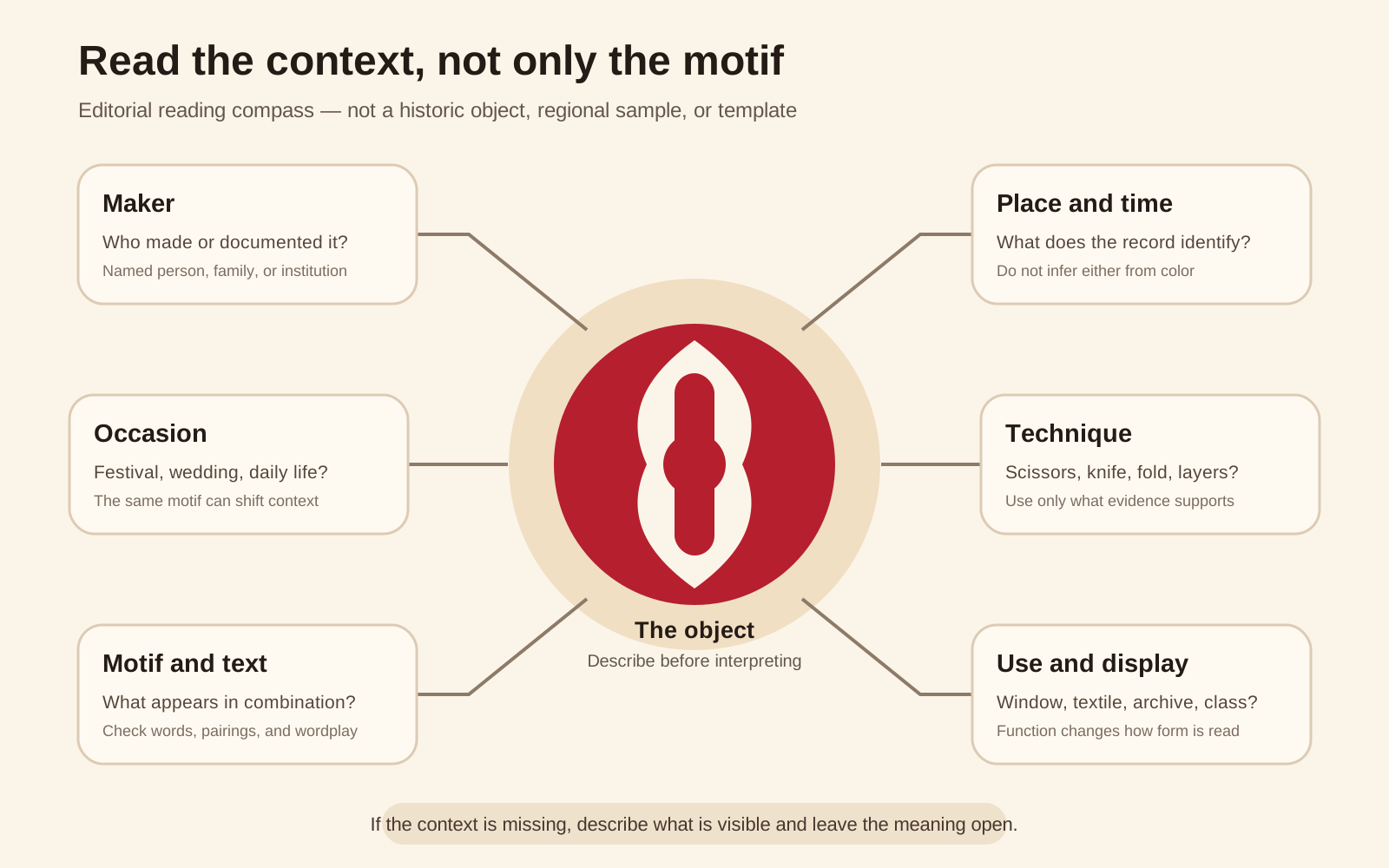
Original editorial vector diagram. It is a context-reading aid, not a historical paper-cut, regional style sample, museum image, or printable template.
Begin with what the name tells you
The Chinese term 剪纸 (jiǎnzhǐ) combines jiǎn, “to cut with scissors,” and zhǐ, “paper.” In English, “Chinese paper cutting” usually names the broader practice, while “a paper-cut” can refer to a finished work. The Robert C. Williams Museum of Papermaking uses jianzhi and describes both scissors and small blades in its overview.
The name is a useful entry point, but it does not settle the technique. Some works are folded and cut with scissors so that one cut repeats. Others are worked flat with a knife or related engraving method. Some are monochrome; others are painted, dyed, or assembled from several colors and layers. A contemporary classroom exercise and a documented ceremonial work may share paper and cutting, yet differ greatly in purpose and cultural weight.
Use 刻纸 (kèzhǐ), often translated as knife-cut or engraved paper cutting, only when a source or maker identifies that method. Terms such as “bridge,” “paper island,” and “cutting key” on this site are modern teaching vocabulary. They explain structure but should not be presented as inherited Chinese workshop terms.
Use evidence points instead of an origin myth
It is tempting to give a folk practice one dramatic beginning. The available evidence is more careful—and more useful—than that.
A surviving object is not the beginning of the practice
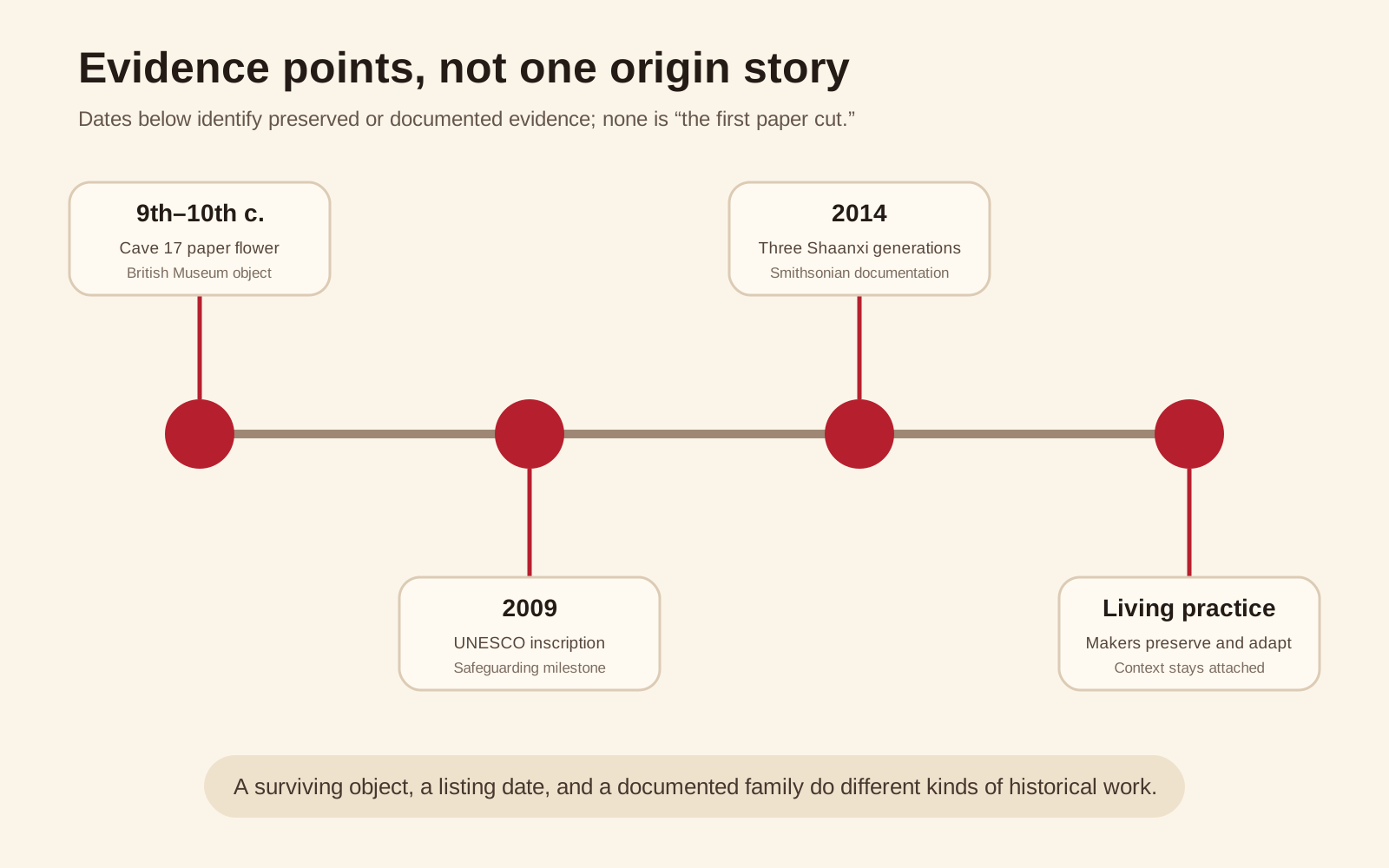
The British Museum records a layered, painted paper flower from Cave 17 at Dunhuang, dated to the 9th–10th century. Its curatorial record describes the group as being among the earliest preserved examples of cut paper and collage. The object is valuable evidence of material, folding, cutting, painting, layering, and preservation. It does not prove that paper cutting began there or in that century. See the British Museum object record .
UNESCO recognition marks a modern safeguarding milestone
In 2009, Chinese paper-cut was inscribed on UNESCO's Representative List of the Intangible Cultural Heritage of Humanity. The UNESCO record presents a living practice with regional variation, community transmission, diverse motifs, and social uses. The inscription date is a recognition and safeguarding milestone, not an origin date.
Modern documentation shows people, not an unbroken slogan
For the 2014 Smithsonian Folklife Festival, three generations of paper cutters from Shaanxi—Gao Fenglian, Liu Jieqiong, and Fan Rongrong—discussed their work and transmission. The Smithsonian National Museum of Asian Art teaching page records that family example. It should be read as a documented Shaanxi story, not as a stand-in for every maker or community.
Original editorial vector timeline. Dates identify preserved or documented evidence, not a complete history, museum image, regional style sample, or the first Chinese paper cut.
See how technique changes the result
The Smithsonian teaching resource names paper, scissors, and an engraving knife among the basic materials and tools. Those tools do not create interchangeable results.
Folded scissor cutting repeats one decision
A fold can mirror or repeat a cut. This can produce balanced flowers, window forms, or radial arrangements, but symmetry is a consequence of that construction—not a requirement for every Chinese paper cut. The number of layers, fold order, and retained centre all affect what can survive opening.
Flat cutting allows direction and asymmetry
A flat sheet can hold a directional figure, scene, character, or asymmetrical line. Interior openings need an entry method that preserves the surrounding paper. Knife work introduces sharper-tool and cutting-surface requirements, so detailed technique and safety belong in the tools guide and project-specific tutorials.
Color and layering expand the surface
Red is common, especially in festive and ceremonial contexts, but it is not the only color used. Museum records also document painted and layered examples. Color can support the purpose of a work, but it does not identify the region, date, or meaning by itself.
These are broad orientations, not a complete classification. A maker may combine methods, and the same motif can be constructed differently for a window, an embroidery pattern, a framed work, or a contemporary artwork.
Follow the paper into everyday settings
Paper cutting has not existed only as framed art. Sources describe several relationships between the cut sheet and daily life.
Household display: the Smithsonian notes walls, windows, doors, and mirrors among display locations.
Festive and life-event settings: UNESCO and Smithsonian materials include festivals and weddings among documented contexts, while other uses depend on community and occasion.
Textile work: the Robert C. Williams Museum describes paper cuts used as embroidery stencils and as patterns connected with indigo-dyed textiles.
Teaching and contemporary display: a supervised classroom activity, a practice sheet, or a framed modern design can be a valid present-day use, but it should be labeled as such rather than presented as an inherited ceremony.
The display surface can affect the design. A window favors contrast and light passing through negative space. A textile pattern may emphasize a contour that can be transferred. A temporary festival decoration and a collected artwork also have different expectations for paper, attachment, and preservation.
Read color and motifs as a composition
Motif meaning is not a lookup table in which one animal or flower always produces one answer. Read the actual combination, text, occasion, period, place, and maker.
Red is common, not compulsory
The Smithsonian notes that red is often used because of its festive and happy associations, while other colors also appear. “Red paper” therefore provides context, not proof that a work belongs to one festival or region. A white classroom practice sheet does not become traditional merely by changing it to red, and a multicolored historical work is not less valid because it differs from the familiar red silhouette.
A fish needs its New Year and language context
In a New Year setting, fish can evoke abundance through wordplay between 鱼 (yú, fish) and 余 (yú, surplus). The phrase and surrounding composition matter. A generic fish-shaped craft should not automatically be labeled a traditional abundance symbol. The site keeps the fuller occasion explanation in the Chinese New Year paper-cutting guide and the verified project in the fish template page.
Double happiness belongs to a documented marriage context
The character 囍 (shuāngxǐ, double happiness) is associated with marriage and marital harmony. A Metropolitan Museum of Art object record documents that reading within a specific Qing-dynasty vase composition. The symbol does not guarantee an outcome, and its cutting geometry needs separate character review. See the double happiness paper-cutting guide for that focused context.
The same caution applies beyond paper cutting. The Met's essay on longevity in Chinese art shows how a butterfly can participate in joy, wedding, or longevity readings depending on wordplay and context. That is precisely why a motif should not be reduced to one universal caption.
Let region, maker, and transmission remain visible
UNESCO's record spans multiple places and ethnic groups. That breadth argues against treating Chinese paper cutting as a single national visual school. A broad teaching comparison may describe some northern works as bold and some southern works as delicate, but it cannot classify every community or object.
When a museum or archive identifies a province, county, maker, family, or date, keep that attribution attached. “A Shaanxi maker documented by the Smithsonian” is more accurate than “the authentic northern style.” Likewise, one paper flower from Cave 17 provides evidence about that preserved object; it does not summarize every work made in the same period.
Transmission is also more than anonymous repetition. The Smithsonian's three-generation example records named people explaining why the practice matters to them. Contemporary makers may preserve, adapt, teach, collect, or redesign forms. Calling the practice “living” should leave room for that agency rather than freezing it into a historic decoration.
Ask six questions before interpreting a paper cut
Use this short method when viewing a museum object, family decoration, online image, or modern template:
What is the object? Is it a paper-cut, a textile pattern, a digital illustration, a classroom craft, or a downloadable file?
Who made or documented it? Look for a named maker, community, museum, archive, or clearly identified site-created design.
Where and when does it come from? Do not infer a province or dynasty from color alone.
How was it made? Note scissors, knife work, folding, painting, dyeing, or layered assembly when the evidence identifies them.
How was it used? Window display, wedding, festival, embroidery pattern, collection object, and modern practice are different contexts.
What supports the interpretation? Prefer an object record or institutional source over a marketplace title, reposted image, or unsourced symbol chart.
If those answers are missing, describe only what you can see: material, color, connected shapes, text, and composition. It is better to leave a meaning open than to attach a confident but unsupported cultural label.
Choose the next task without mixing page roles
After the cultural orientation, move to the page that owns your practical question:
Keeping these roles separate protects both cultural accuracy and practical usefulness. A cultural page should not pretend to be a download library, and a template card should not carry an entire history in a few lines.
Living practice questions
Questions about the living practice
What is Chinese paper cutting called in Chinese?+
It is commonly called 剪纸 (jiǎnzhǐ). The term combines the characters for cutting with scissors and paper. In English, “Chinese paper cutting” names the practice, while “a paper-cut” can describe a finished work.
Is every Chinese paper cut red and symmetrical?+
No. Red is common in festive and ceremonial contexts, and folding can create symmetry, but sources also document other colors, painted or layered works, flat cutting, and varied regional and personal approaches.
How old is Chinese paper cutting?+
No single verified date marks the beginning of the whole practice. A British Museum paper flower dated to the ninth–tenth century is among the earliest preserved cut-paper and collage examples, while UNESCO's 2009 inscription is a modern recognition milestone rather than an origin date.
Does each paper-cut motif have one fixed meaning?+
No. Meaning can depend on companion images, text, wordplay, color, occasion, region, period, and maker. Use a museum object record or another reliable contextual source instead of assigning one universal meaning from the motif alone.
Is Chinese paper cutting still practiced today?+
Yes. UNESCO treats it as living intangible cultural heritage, and museums and festivals document named contemporary makers and family transmission. Modern teaching and design may also adapt the practice, provided new work is not misrepresented as a historic object or universal regional style.
Identify the context first, then choose the practical page.
The paper may be delicate; the evidence should not be. Once the cultural frame is clear, move into pattern reading, beginner practice, or a verified template.