A double happiness paper cutting centers on the Chinese character 囍, commonly called shuāngxǐ, or “double happiness.” The character is closely associated with marriage and marital harmony, while paper cutting has documented uses in weddings and other celebrations.
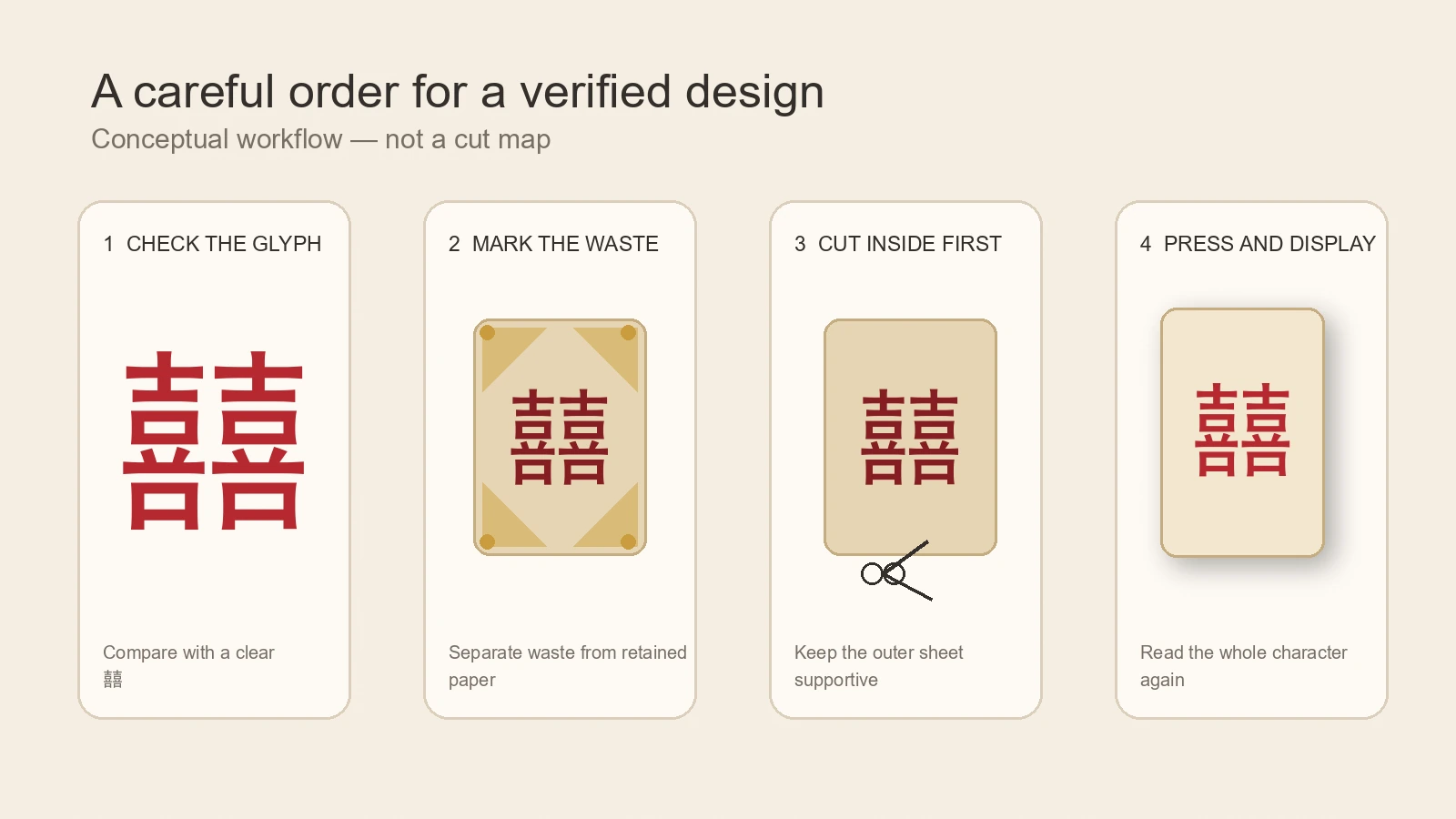
This guide explains that context, shows how to plan a basic cut from a separately verified design, and helps you check the result before display. It does not include a downloadable template.
Read the symbol before you cut it
The most important detail is not the ornament around the character. It is the character itself.
囍 visually joins two forms of 喜, the character for happiness or joy. The Metropolitan Museum of Art identifies it as shuangxi and explains, in the context of a Qing-dynasty vase, that it alludes to marital harmony. That makes the wedding association specific enough to explain, but not a promise that displaying the symbol will change a couple's future.
Before tracing any pattern, compare it with a clearly rendered 囍. Check the left and right halves, the horizontal bars, the two box-like sections in each half, and the overall balance. Decorative flowers, hearts, bats, or borders may surround a design, but they should not make the central character unreadable.
If a file is labelled “double happiness” but the glyph looks uncertain, stop. A cleaner verified design is better than an ornate one with a damaged or invented character.
A wedding association, not a universal promise
The wedding context is well documented. The Met connects 囍 with marital harmony. UNESCO includes weddings among the festive uses of Chinese paper cutting, while also stressing that motifs vary by region and purpose. The Smithsonian's National Museum of Asian Art likewise notes that paper cuts are used for weddings as well as festivals and other life events.
Those sources support careful language: double happiness is associated with Chinese wedding decoration. They do not support saying that every Chinese wedding uses the same design, that red paper is compulsory, or that the symbol produces luck or a harmonious marriage.
This page also keeps the motif separate from the site's broader introduction to Chinese paper cutting. 囍 is one culturally meaningful subject within a much larger and regionally varied practice.
Choose the form before choosing the tool
“Double happiness paper cut” can describe more than one construction. Decide what the finished paper should retain before making a cut.
A positive design keeps the red character and removes the surrounding paper. Every retained section must either connect to another retained section or be mounted as a separate piece. Thin joins are fragile, and isolated shapes can fall away.
A framed negative-space study starts with a connected sheet or border and removes selected interior areas. This can make the sheet easier to handle, but the removed spaces still need to preserve a legible 囍. It is not automatically simpler just because the outer frame stays intact.
For either form, use a pattern whose retained paper and waste areas are already identified. Do not assume that any font outline is cuttable. Typefaces are designed for reading on a screen or page; they do not automatically provide the bridges that a single connected paper cut needs. The site's guide to paper-cutting patterns and negative space explains bridges and paper islands in more detail.