Use a rectangle
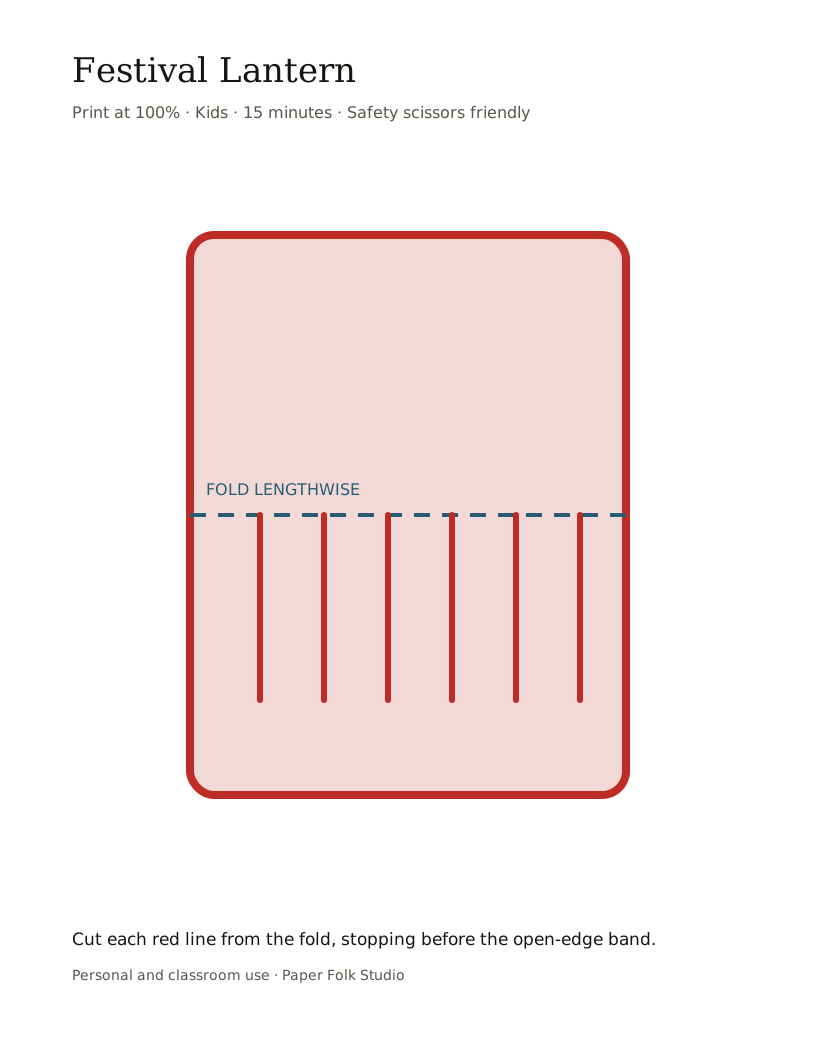
A rectangular sheet creates the lantern body. Fold it lengthwise so every slot begins at the folded edge.
Folded paper lantern project
This lantern uses a folded rectangle and parallel scissor cuts rather than a detailed flat template. A wide uncut strip holds the top and bottom together when the paper curves into shape.
Mark the stop line
A rectangular sheet creates the lantern body. Fold it lengthwise so every slot begins at the folded edge.
Mark a stop line along the open edge and leave a wide uncut strip for joining and support.
Keep the parallel lines far enough apart that the strips do not tear when the lantern opens.
Classroom safety
An adult can draw the fold and stop line so children focus on following visible boundaries.
Paper tape or glue avoids sharp staples around small hands.
Keep the finished lantern away from candles, bulbs, and other heat sources.
Fold, cut, curve
The scissor cuts stop before the open edge. Opening and joining the rectangle makes those slots spread into the lantern shape.
Fold a rectangle lengthwise and keep a wide uncut strip along the open edge.
Draw parallel lines from the fold toward, but not through, the open-edge strip.
Follow each line with safety scissors and stop at the marked boundary.
Unfold, curve into a cylinder, and secure the short edges with paper tape.
Asked at the craft table
One or more slots crossed the stop line. Leave a wider uncut strip and stop each cut at the same boundary.
No. It is a paper decoration and should be kept away from flames, hot bulbs, and other heat sources.
Use a ruler to mark equal intervals before folding, then let each maker cut from the fold to the shared stop line.
Keep exploring